Supermassive black holes: Proven ejection from galaxies
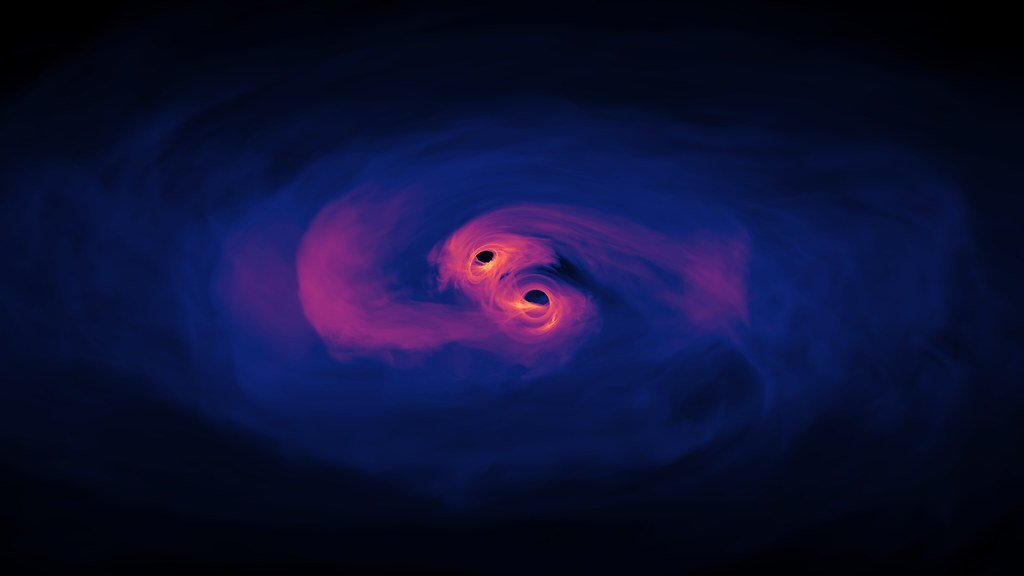
Supermassive black holes are at the center of a new discovery that suggests they can be ejected from their galaxies. A recent quasar survey has provided evidence supporting this decade-old prediction.
What are supermassive black holes?
Supermassive black holes are colossal entities that reside at the centers of most galaxies, including our Milky Way. They typically have masses ranging from millions to billions of times that of our Sun. These astronomical phenomena play a crucial role in the formation and evolution of galaxies, influencing their structure and dynamics.
Formed during the early stages of the universe, supermassive black holes are believed to grow by accumulating gas, dust, and stars, as well as merging with other black holes. Their immense gravitational pull affects the surrounding environment, leading to the formation of accretion disks, where matter spirals inwards at high speeds, emitting significant amounts of energy in the process.
The presence of these black holes has been confirmed through various observational techniques, including the study of star orbits and the emission of X-rays. Recent findings suggest that some supermassive black holes may even be ejected from their host galaxies due to gravitational interactions with other massive objects. This challenges traditional views and opens up new avenues for understanding their dynamics and the evolution of galaxies.
In summary, supermassive black holes are not only vital to galactic formation but also remain a subject of intense research, revealing the complexities of our universe.
The role of quasars in black hole studies
Quasars, the luminous cores of distant galaxies, play a crucial role in advancing our understanding of supermassive black holes. These energetic phenomena arise when material, such as gas and dust, spirals into a black hole, resulting in the release of immense energy. Researchers have long speculated that the activity of quasars could provide insights into the dynamics of supermassive black holes and their interactions with their host galaxies.
Recent studies utilizing quasar surveys have begun to confirm theories surrounding the ejection of supermassive black holes from galactic centers. This phenomenon occurs when gravitational forces and energy output from a black hole can lead to the expulsion of the black hole itself. The implications are significant, as they suggest that black holes can migrate through the cosmos, potentially influencing the formation and evolution of other galaxies.
Key findings from these surveys indicate a correlation between quasar activity and black hole ejections. Observations show that when quasars are activated, the surrounding environment undergoes dramatic changes, enhancing the likelihood of supermassive black holes being propelled away from their origins.
As researchers continue to analyze quasar data, the connection between these luminous objects and supermassive black holes will likely reveal even more about the universe’s enigmatic structures.
Evidence supporting black hole ejection
Recent studies have provided compelling evidence supporting the theory that supermassive black holes can be ejected from the centers of galaxies. This groundbreaking research stems from a comprehensive quasar survey, which has yielded significant insights into the dynamics of these colossal cosmic entities.
Researchers observed a number of quasars that exhibit unusual characteristics, suggesting that they may have originated from disrupted galactic centers. The key findings of the study include:
- Unusual trajectories: Many quasars display movement that is inconsistent with being stationary at the center of their host galaxies.
- Gravitational wave signals: Evidence points to supermassive black holes merging, leading to potential ejections as a result of gravitational interactions.
- High-velocity jets: Some quasars emit jets of material at nearly the speed of light, indicating powerful energy dynamics likely associated with a black hole being propelled from its galaxy.
The findings not only support a decade-old prediction regarding supermassive black holes but also enhance our understanding of galactic evolution and the life cycles of these enigmatic cosmic giants. As researchers continue to investigate, the implications of black hole ejection could reshape our knowledge of the universe.
Implications for galaxy formation
The recent findings regarding supermassive black holes being ejected from their galactic centers have profound implications for our understanding of galaxy formation and evolution. Traditionally, it was believed that these massive entities played a crucial role in the development and stabilization of galaxies. However, the possibility that they can be ejected challenges this long-held view.
Researchers are now considering several key implications:
- Galaxy Structure: The ejection of supermassive black holes could lead to a reevaluation of how galaxies are structured. If these black holes are removed from the center, it may alter the gravitational dynamics that help maintain the galaxy’s shape.
- Galactic Mergers: The ejection process could provide insights into how galaxies interact and merge. A supermassive black hole’s departure might influence the merging process, potentially leading to the formation of new galactic structures.
- Star Formation: The presence of a supermassive black hole at a galaxy’s center is often linked to star formation rates. Understanding its ejection might reveal new factors influencing star creation within galaxies.
As researchers continue to analyze these findings, the implications for our understanding of cosmic evolution will undoubtedly expand, reshaping the narratives surrounding supermassive black holes and their role in the universe.
Historical predictions about black holes
Historical predictions about supermassive black holes have shaped our understanding of the cosmos and the role these colossal entities play in galactic evolution. In the early 1970s, theorists began to postulate that supermassive black holes, located at the centers of galaxies, could be ejected due to gravitational interactions during galaxy mergers.
One pivotal study in the 1990s suggested that clashing galaxies could lead to one black hole being expelled, while the other remained anchored. This theory was met with skepticism as observational evidence was scarce, leaving many to question the likelihood of such events occurring.
However, recent findings from a comprehensive quasar survey have revitalized interest in these historical predictions. As researchers examined the movement patterns of quasars, they noted anomalies that could indicate the presence of ejected supermassive black holes. This has led to a growing consensus that these expulsions are not merely theoretical but may be a common occurrence in the universe.
As scientists continue to investigate the dynamics of black holes and their influence on galaxy formation, the historical predictions serve as a reminder of the evolving nature of astronomical research and the importance of adapting theories based on new evidence.
Future research directions in astronomy
As researchers continue to unravel the mysteries surrounding supermassive black holes, several future research directions in astronomy have emerged. These areas aim to deepen our understanding of their formation, evolution, and impact on galaxies.
- Advanced observational techniques: Utilizing next-generation telescopes and instruments, astronomers plan to study the dynamics of galaxies hosting supermassive black holes. This includes examining stellar motions and gas dynamics in greater detail.
- Simulations of galaxy mergers: Computer simulations will play a crucial role in modeling how supermassive black holes interact during galaxy mergers. These simulations could provide insights into the conditions that lead to ejection events.
- Exploration of ejection mechanisms: Understanding the precise mechanics behind black hole ejections is vital. Researchers aim to investigate gravitational waves and other phenomena associated with these ejections to develop a comprehensive theory.
- Long-term monitoring of quasars: Continued observation of quasars will help astronomers identify patterns and anomalies linked to supermassive black holes. Such data may illuminate how these massive entities influence their host galaxies over time.
By pursuing these directions, the field of astronomy seeks to confirm and expand upon the decade-old hypotheses regarding supermassive black holes and their role in shaping the universe.
By NASA Goddard Photo and Video via Openverse